 Jun 27, 2026
The good news is that today’s solar panels are designed to provide reliable performance for decades. With quality equipment, professional installation, and regular maintenance, a well-designed solar system can continue generating clean electricity for 25 to 30 years or more.
Whether you’re installing a residential solar system for your family home or a commercial solar system for your business, understanding the lifespan of each component helps you make an informed investment.
At Solargrid Energy, we install high-quality solar solutions for homeowners and businesses across Wellington and Auckland, helping customers enjoy dependable renewable energy for many years.
What Is the Average Lifespan of a Solar System?
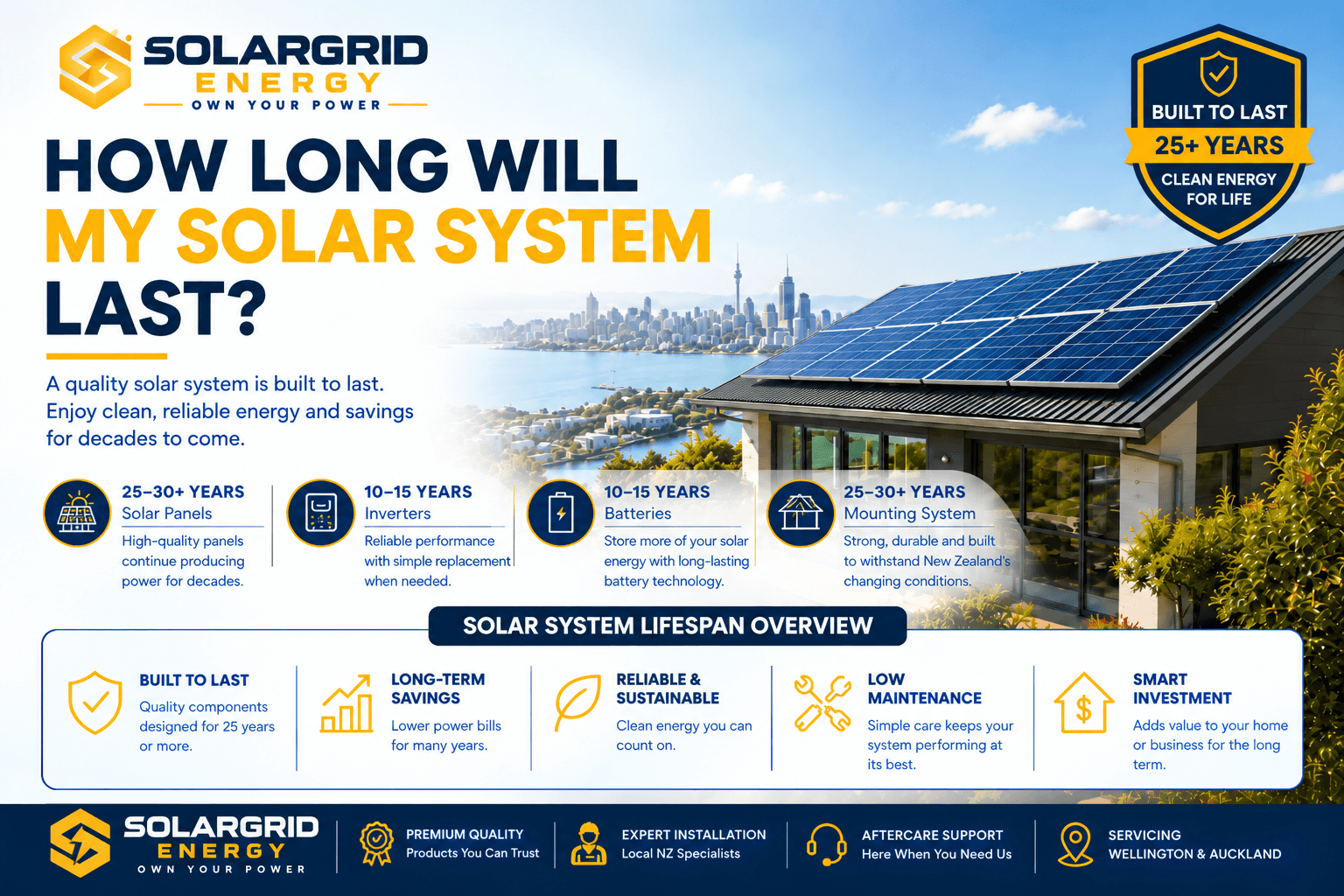
A complete solar system is made up of several components, each with its own expected lifespan.
| Solar Component | Expected Lifespan |
| Solar Panels | 25–30+ years |
| Solar Inverter | 10–15 years |
| Mounting System | 25–30+ years |
| Battery (if installed) | 10–15 years (varies by technology) |
| Monitoring Equipment | 10+ years |
While some components may eventually need replacing, the solar panels themselves usually remain the longest-lasting part of the system.
How Long Do Solar Panels Last?
Modern solar panels are built to withstand New Zealand’s changing weather conditions, including strong winds, heavy rain and UV exposure.
Most premium solar panels are expected to last 25 to 30 years, and many continue producing electricity well beyond that period. They don’t suddenly stop working—instead, they gradually produce slightly less electricity each year.
This gradual reduction is known as panel degradation.
Do Solar Panels Lose Efficiency Over Time?
Yes—but the loss is usually very small.
Most quality solar panels lose approximately 0.5% of their generating capacity each year.
That means after 25 years, many premium panels can still produce around 85–90% of their original output, depending on the manufacturer and panel quality.
For homeowners and businesses, this means your solar investment continues delivering electricity and savings long after the system has paid for itself.
What About the Solar Inverter?
The inverter is often called the “heart” of your solar system because it converts the electricity produced by your solar panels into usable power for your property.
Unlike the panels, inverters usually have a shorter lifespan.
Most quality inverters last around 10 to 15 years, depending on usage, environmental conditions and manufacturer quality.
Many homeowners replace the inverter once during the lifetime of their solar system.
How Long Do Solar Batteries Last?
If your system includes battery storage, you can expect the battery to last approximately 10 to 15 years, depending on the battery type, charging cycles and how it is used.
Regular monitoring and correct system settings help maximise battery life.
Residential Solar System Lifespan
A residential solar system is designed to provide reliable energy for decades.
With proper care, homeowners can expect:
- Lower electricity bills year after year
- Reliable daytime electricity generation
- Minimal maintenance requirements
- Long-term return on investment
- Improved energy independence
Many New Zealand households continue benefiting from their solar systems well beyond the warranty period.
Commercial Solar Systems Are Built for Long-Term Performance
A commercial solar system is often larger than a residential installation and is designed to support ongoing business operations.
Businesses can benefit from:
- Reduced operating costs
- Lower electricity expenses
- Improved sustainability
- Long-term energy security
- Predictable energy savings
Like residential systems, commercial solar panels are designed for decades of operation when professionally installed and maintained.
What Can Reduce the Lifespan of a Solar System?
Several factors influence how long a solar system performs at its best.
These include:
Poor Installation
Even premium solar panels may underperform if they’re installed incorrectly.
Working with an experienced installer helps ensure your system operates safely and efficiently from day one.
Low-Quality Equipment
Cheaper components may have shorter warranties and can degrade more quickly.
Choosing proven, high-quality products often delivers better long-term value.
Extreme Weather
New Zealand’s climate is generally well suited to solar energy, but prolonged exposure to severe weather, falling branches or debris can affect system performance if damage occurs.
Lack of Maintenance
Although solar systems require very little maintenance, occasional inspections help identify issues before they become costly repairs.
How to Make Your Solar System Last Longer
A few simple steps can help maximise the lifespan of your investment.
Keep Solar Panels Clean
Dust, leaves, bird droppings and other debris can reduce energy production.
Occasional cleaning helps maintain peak performance.
Schedule Professional Inspections
Having your solar system inspected every few years helps identify loose wiring, damaged components or reduced performance.
Monitor System Performance
Most modern solar systems include monitoring software that allows you to track electricity generation.
Unexpected drops in production may indicate the need for servicing.
Trim Nearby Trees
Keeping trees trimmed helps reduce shading and prevents branches from damaging your solar panels during storms.
Understanding Solar Warranties
Most quality solar systems include several warranties.
These may include:
- Product warranty for manufacturing defects
- Performance warranty guaranteeing long-term electricity output
- Installation or workmanship warranty
- Inverter warranty
- Battery warranty (if installed)
Always review warranty terms carefully before choosing a solar installer.
Is Solar Still Worth It After 25 Years?
Absolutely.
Even after 25 years, many quality solar panels continue producing electricity, although at a slightly reduced capacity.
Since many systems recover their installation costs well before reaching this age, homeowners and businesses can continue enjoying years of low-cost renewable energy afterwards.
Why Choose Solargrid Energy?
At Solargrid Energy, we believe a solar system should be designed to deliver dependable performance for decades—not just the first few years.
Our team provides:
- High-quality solar panels
- Premium inverters
- Professional installation
- Tailored residential and commercial solar solutions
- Honest advice
- Ongoing customer support
- Local expertise across Wellington and Auckland
Every installation is carefully designed to maximise performance, reliability and long-term value.
Frequently Asked Questions
How long do solar panels last in New Zealand?
Most quality solar panels are expected to last 25 to 30 years or longer, with only a gradual reduction in electricity production over time.
Will I need to replace my inverter?
Yes. Most solar inverters have an expected lifespan of 10 to 15 years, so many systems require one inverter replacement during their lifetime.
Do solar panels stop working after 25 years?
No. Solar panels usually continue generating electricity after 25 years, although at a slightly lower efficiency than when they were first installed.
Does regular maintenance extend the life of a solar system?
Yes. Keeping panels clean, monitoring system performance and arranging occasional inspections can help maintain efficiency and identify issues early.
Are commercial solar systems built to last as long as residential systems?
Yes. Both residential and commercial solar systems use durable components designed for decades of reliable operation when installed correctly and maintained properly.
Invest in Solar That Lasts
A high-quality solar system is one of the longest-lasting improvements you can make to your property. With premium solar panels, professional installation and routine maintenance, your system can continue generating clean, reliable electricity for decades.
Whether you’re planning a residential or commercial installation in Wellington or Auckland, Solargrid Energy is here to help you choose a solution built for long-term performance.
Contact Solargrid Energy today to arrange a free consultation and discover how a quality solar system can power your future for years to come.